• Skip to main content

March for Life

  • National March
    • 2026 March for Life
    • 2026 Speakers
    • “Life is a Gift”
    • Hotel & Travel Information
    • Events
    • Sponsorships
    • 2025 March for Life
      • 2025 Theme
      • 2025 Speakers
      • 2025 Livestream
      • 2025 March Highlights
  • State Marches
    • Find Your State
    • Alaska
    • Arizona
    • California
    • Colorado
    • Connecticut
    • Georgia
    • Indiana
    • Iowa
    • Kansas
    • Kentucky
    • Maryland
    • Michigan
    • Montana
    • New Hampshire
    • New Jersey
    • North Dakota
    • Ohio
    • Oklahoma
    • Oregon
    • Pennsylvania
    • Virginia
  • Pregnancy Help Donation Drive
  • News
    • BLOG
    • PRESS RELEASES
    • IN THE NEWS
  • Education
    • Post-Roe America
    • Dobbs SCOTUS Case
  • About us
    • MISSION
    • Our Team
    • Our President
    • Impact
    • FAQs
    • Jobs
    • Internships
    • CONTACT US
  • Store
  • TAKE ACTION
  • DONATE

Sensible Fetal Pain Laws

June 8, 2016 By Jeanne Mancini Leave a Comment

Sensible Fetal Pain Laws


South Carolina Governor Nikki Haley recently signed a law restricting abortion after 19 weeks of pregnancy. Citing fetal pain science, South Carolina joins 16 other states that have passed legal protections for unborn babies halfway through pregnancy. The first state to pass such a law was Nebraska, in 2010.

The immediate impact of this first fetal pain law was that the notorious late-term abortionist, Leroy Carhart, moved his practice from Nebraska to the less abortion restrictive state of Maryland. For the past six years, he has conducted abortions on babies that are fully five months of gestation or more at nearby Germantown Reproductive Health Services, about a twenty-minute drive from the Nation’s Capital.

In the early 2000s, Leroy Carhart became a “hero” and the “face” of partial-birth abortion and late term abortion as the plaintiff in two lawsuits, Stenberg v. Carhart and Gonzales v. Carhart. He has been quoted saying, “I … feel like I’m doing God’s work.” He once told a Kansas TV reporter: “I see the anti-choice movement as nothing different from the Taliban.”

The March for Life Education and Defense Fund exists to build a culture of life and love. Our goal is to defend and protect life at any stage, acknowledging that abortion takes the life of one and wounds the other. That said, late term abortion is physically much harder on women for obvious reasons; as the baby develops and the pregnancy progresses, the more difficult and risky the procedure becomes.

To that point, Carhart is currently under congressional investigation after reports recently became public that five women from his clinic over the course of six months needed to be hospitalized. Subpoenas have been issued to both Carhart and Germantown Reproductive Health Services so that more information can be ascertained.

Who is impacted by measures similar to South Carolina’s fetal pain bill? The large majority of abortions in our country occur before 12 weeks of gestation.  While the U.S. does not have abortion reporting requirements, the Center for Disease Control and Prevention (CDC) collects voluntary data. The general estimate is that approximately 15,000-18,000 abortions occur after 21 weeks in the U.S. annually.

Why do women have abortions so far along in the pregnancy? The lack of government reporting requirements translate to very little hard public data but one source, Ron Fitzsimmons, former Executive Director of the National Coalition of Abortion Providers, in an interview with the New York Times estimated that in the majority of cases, abortions performed at 20 weeks or later are on a healthy baby and healthy mother.

Another important aspect of these laws is that they are reflective of what Americans want. Late-term abortion is not at all popular with the American people, even those who identify as pro-choice. A Marist poll from earlier this year revealed that as many as 8 out of 10 Americans believe that abortion should be limited to the first three months of pregnancy. And even for those who self-identify as pro-choice, a large majority —66%– agree that abortion should be limited at most to the first three months of pregnancy.

As the work of Leroy Carhart continues to come to the light through the congressional investigation, and as more states continue to enact laws limiting late-term abortion, let’s be honest that fetal pain laws are common sense – they protect women and babies and have the support of the majority of Americans.

Sometimes people ask if incremental laws have an impact. The proof is evident.
Filed Under: Blog

June 3, 2016 By Scott Zipperle Leave a Comment

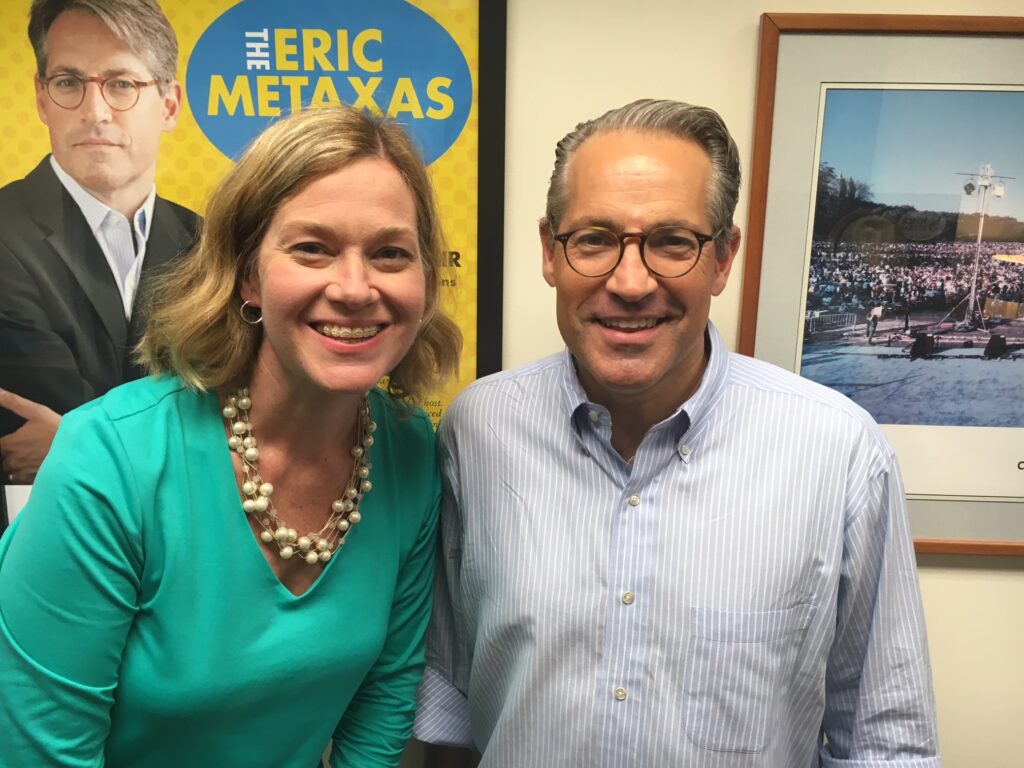
Jeanne Mancini on the Eric Metaxas Show!


This week, March for Life President Jeanne Mancini had the privilege of interviewing with author and radio host, Eric Metaxas at his studio in New York City.

Jeanne had the opportunity to discuss the March for Life, as well as the history and current state of the pro-life movement on the Eric Metaxas Show.

>>>> Click HERE to listen to the audio of the interview.

jeanne and eric metaxas

Below is a tweet from the Eric Metaxas Show that gives a brief preview of some of the discussion about what we do at the March for Life!


metaxas tweet

We hope you find this radio program interesting and informative! 

Filed Under: Media Center

May 19, 2016 By Scott Zipperle Leave a Comment

The March for Life Around the World


Did you know that the March for Life in Washington, D.C. has inspired a worldwide movement?

Since the March for Life began in 1974 in the Nation’s Capital, hundreds of thousands of people have participated in these peaceful demonstrations which are a celebration of life around the globe.

In recent weeks, marches have been held in Ottawa and Victoria, Canada; Birmingham, United Kingdom; Prague; Rome; Brussels; Lima, Peru; Lisbon, Portugal; Zagreb, Croatia; and in over 40 cities across Colombia!  (Marches are also held in France, Mexico, and Ireland. Let us know if we missed any!)

Lisbon, Portugal
Colombia
Birmingham, England
Ottawa, Canada
Rome, Italy
Lima, Peru

The March for Life – in ANY country – is culture-changing because of the profound truth about life and the inherent dignity of the human person we uphold, often against a negative cultural backdrop.

The sheer number of pro-lifers at these events is a witness to those who are confused about the beauty and gift of life! Plus, participants experience solidarity and hope which are so necessary for working against this most critical human rights abuse.

>>>> Watch this inspiring video, “The March for Life Around the World.”

As the push for abortion and euthanasia increases around the world, we must lead the charge in building a culture of life. 

For those here in the United States, will you join us? The 2017 March for Life is set for January 27, 2017. Let us know you’ll be there!

Filed Under: Blog

May 18, 2016 By Scott Zipperle Leave a Comment

Senate Republicans Poised to Help Create Slush Fund for International Abortion Groups 


FOR IMMEDIATE RELEASE
May 17, 2016
CONTACT: Andrew Shirley
Shirley & Banister Public Affairs
703-739-5920/800-536-5920

Good Intentions Sometimes Make Bad Policy

 
Washington, D.C – Last week Senate Armed Services Chairman John McCain (R-Ariz.), at the request of Senator Bob Corker (R-Tenn.), included language in the National Defense Authorization Act (NDAA) that is of great concern to pro-life activists.  The NDAA is a United States federal law specifying the budget and expenditures of the United States Department of Defense. Language added last week will create a single entity to control $37.5 million for international sex trafficking grants with minimal oversight and no inherent pro-life protections.  Jeanne Mancini, President of the March for Life Education and Defense Fund had the following comment:

“Human trafficking of any kind – forced labor, sex trafficking, and other forms of modern day slavery are an affront to the inherent dignity of the human person. Many wonderful religious and non-profit groups are dedicated to fighting the scourge of human trafficking and to restoring hope and healing to its victims. We are grateful for this brave and critical work.

However, included in the NDAA is funding language for an anti-trafficking program that lacks basic pro-life protections. Recipients of this funding will likely be big abortion businesses rather than groups holistically dedicated to fighting the scourge of trafficking and defending the inherent dignity of the human person.

I have no doubt Senators McCain and Corker truly want to end the atrocities connected to trafficking.  But good intentions do not always translate to good policy.  Legislative efforts to fight trafficking must include oversight and pro-life protections if they are to be regarded as serious, and potentially effective, efforts to combat human trafficking.”

The March for Life in Washington, D.C., began as a small demonstration on January 22, 1974, the first anniversary of the now-infamous Supreme Court decisions in Roe v. Wade and Doe v. Bolton and rapidly grew to be the largest pro-life event in the world.  The peaceful demonstration that has followed on this somber anniversary every year since is a witness to the truth concerning the greatest human rights violation of our time, abortion.

Jeanne Mancini, President of March for Life Education and Defense Fund, is available for interviews. For more information or to schedule an interview, please contact Andrew Shirley at or (703) 739-5920.

###

###

Filed Under: Media Center

May 9, 2016 By Scott Zipperle 1 Comment

FDA’s New RU-486 Policy Already Having Disastrous Impact


Less than two months after the Food and Drug Administration (FDA) loosened restrictions on the abortion drug regimen of mifepristone and misoprostol, also referred to as chemical abortion, or “RU-486,” there are already reports about the new guidelines’ impact. While precise data won’t be available for several months (or more likely, years), officials from Planned Parenthood in the state of Texas are reporting a sharp increase in the number of women using RU-486 to terminate their pregnancies.

“We have seen a fourfold increase in the number of our patients choosing medication abortion since the FDA updated its protocol,” said Sarah J. Wheat, chief external affairs officer at Planned Parenthood.

What exactly did the FDA protocol change? In short, the FDA loosened restrictions for the abortion pill regimen by requiring a lower dose, less medical oversight, and permitting use of the drug regimen for an increased three weeks of pregnancy; up to 10 weeks in a pregnancy instead of the previous seven weeks.

According to Arina Grossu, Director of the Family Research Council’s Center for Human Dignity, “With these modifications, the FDA accepted wholesale the “off-label” regimen now being used by abortion providers like Planned Parenthood. These changes will greatly lower the already inadequate safety standards that had been put in place when the drug was first approved by the Clinton FDA in 2000.”

It is a well-known fact that back in 2000 when RU-486 was approved that the process was rushed, politicized and manipulated. A lesser known fact but very important regarding this policy change is that the new chemical abortion protocol will have a significant impact upon the handful of states currently engaged in litigation related to use of RU-486; the impact will likely be favorable to the abortion industry.

>>>> Click HERE to read FRC’s full report.

Some are calling the FDA’s reversal a politically-motivated move by the Obama Administration in its final year, particularly in light of the thousands of FDA adverse event reports showing that chemical abortion is less safe than surgical abortion. Read more on that HERE. Thankfully, members of Congress from the House and Senate are aware of such politicization around the safety of chemical abortion and are using their oversight with FDA to question the recent changes and new guidelines.

In a letter to Commissioner Califf, FDA’s top official, Congressman Chris Smith (R-NJ), Senator James Lankford (R-OK) and 73 of their colleagues write:

“We are deeply disappointed to learn that you have loosened FDA standards governing use of the abortion drug mifepristone, also referred to as Mifeprex or RU-486.  This powerful abortion drug has been associated with serious adverse events including hemorrhaging, severe infections and even deaths of mothers who have taken it.”

>>>> Click HERE to read the entire letter.

As March for Life President Jeanne Mancini has pointed out, “RU-486 (chemical abortion) is harder on women physically and involves less medical oversight than surgical abortion.” One of the requests in the congressional letter is that the FDA release the latest adverse events reports related to RU-486, showing the number of complications and deaths related to the drug. The March for Life strongly agrees that this information is necessary.

RU-486 is not only a dangerous drug for women, it ends the life of an innocent unborn baby. As we are already seeing in Texas, the FDA’s revised guidelines will lead to more and more chemical abortions.

>>>> Click HERE to read more about the dangerous effects of RU-486.

The congressional letter requests that the FDA provide the necessary information by May 20. The March for Life thanks Congress for their oversight in this matter and makes the plea to those involved in such decisions that women’s health should not be politicized. Greater access to abortion does not equate better women’s health. The lives of women and babies are at stake.

Former abortionist, Dr. Anthony Levatino, explains “the abortion pill,” a non-surgical medical abortion procedure performed during the first semester.

Filed Under: Blog

  • « Go to Previous Page
  • Page 1
  • Interim pages omitted …
  • Page 109
  • Page 110
  • Page 111
  • Page 112
  • Page 113
  • Interim pages omitted …
  • Page 185
  • Go to Next Page »
#WHYWEMARCH
| Contact Us | Privacy Policy | Terms of Use | ©2026 March For Life
DESIGNED BY FUZATI