Tens of Thousands March in DC for 2026 March for Life
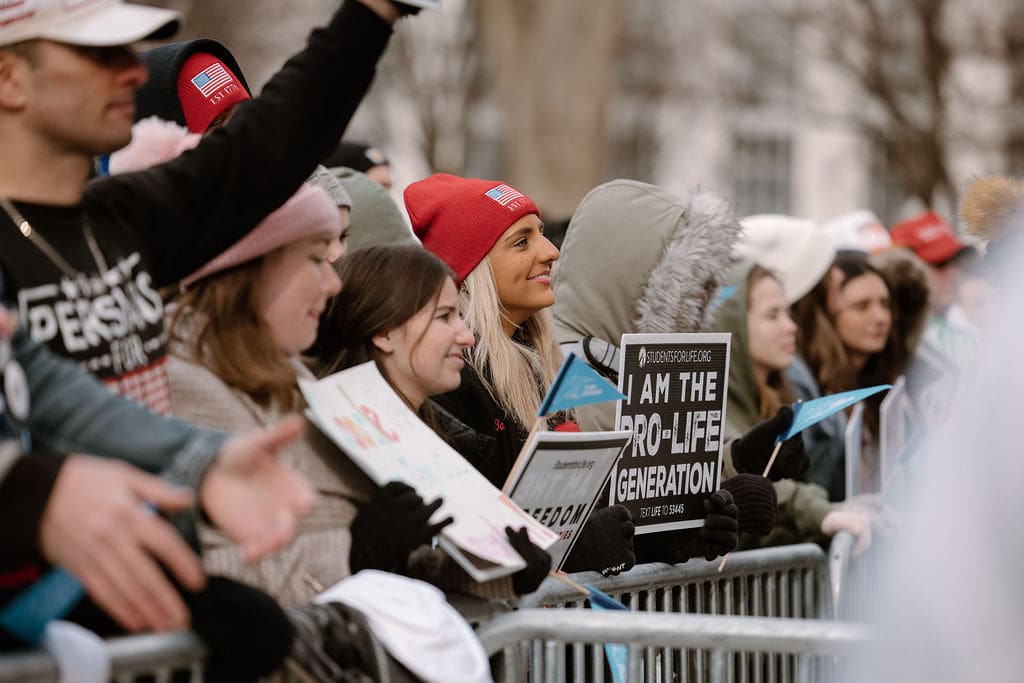
(National Catholic Register) — Tens of thousands of pro-life advocates gathered in the nation’s capital Friday for the 53rd annual March for Life, marching from the National Mall to the Supreme Court to voice their opposition to abortion.
This year’s event unfolded under unusually mild January weather, allowing participants to move steadily through the streets of Washington, even as the city prepares for a potentially paralyzing winter storm later in the weekend.
Vice President JD Vance, speaking for the second consecutive year, told those gathered that he and his wife, Usha, are expecting their fourth child, a third son, in late July, a personal note that drew hearty cheers from the crowd.
Vance leaned into his message that pro‑life advocacy is not just about legal arguments but a broader cultural affirmation of life.
“Let the record show you have a vice president who practices what he preaches,” he said, referencing his family’s news while framing family life as central to the cause.
Partway through his remarks, a heckler began shouting about the administration’s failure to ban the abortion pill, which accounts for more than 60% of abortions in the U.S. and has been the subject of recent criticism of the Trump administration by pro-life advocates.
Vance acknowledged the interruption calmly, noting that “inevitably there will be debates within this movement … they help keep people like me honest,” not saying “abortion pill” but rather emphasizing that internal disagreements should never distract from the larger mission of protecting life.
He walked through a broader narrative of progress from the 2022 Dobbs v. Jackson Women’s Health Organization decision, which overturned Roe v. Wade, and the administration’s policy shifts. Vance reminded the crowd that “we’re marching for life because we want our fellow Americans … to know that life is worthy of protection. That is why we march today,” adding that they have “an ally in the White House.”
Catholic speaker Sarah Hurm followed the political remarks, sharing her own journey through unplanned pregnancy, a reversal ministry, and the joy she found in carrying her son to term. She urged those present to see support for life not just in large demonstrations but in the everyday actions of community and care. “Saving a life can be as simple as answering a phone call, driving a friend to an ultrasound, or helping pick out a car seat. … You have that power. Be that person who connects a woman to hope,” she told the crowd.
Shortly after the rally concluded, lines of marchers began to move. The rally quickly became a flowing procession down Constitution Avenue, with clergy and congregations, school groups and young adults all advancing as one. Prayers intermingled with hymns, and people walked with intent — some in silence, others discussing the day ahead.
Students from Franciscan University of Steubenville, Ohio, and Lourdes Academy in Oshkosh, Wisconsin, walked with focus and energy. Franciscan student Sarah Gacka, a junior, said her passion was stirred by her younger brother, who is autistic, reminding people that “defending life includes advocating for those with special needs.”
Lourdes Academy high schooler Trent Krueger described traveling from Wisconsin to honor the choice his mother made years ago to place a sibling for adoption after an unplanned pregnancy at 19, calling it the “best decision she ever made.”
Religious communities added spiritual depth, as they’ve done for the past 53 years.
Father Rhett Williams, University of South Carolina chaplain, talked about bringing students to see “the universal Church in action,” demonstrating how the Church’s teaching on life resonates across generations.
Daniel Floyd of Atlanta carried a second‑class relic of St. Michael the Archangel from Italy, a symbol of spiritual resolve for many in the march. Consisting of stones from the Sanctuary of Monte Sant’Angelo in Gargano, Italy — a place where St. Michael purportedly appeared around A.D. 490 — the relic served as a “spiritual reflection” of the fearless leader of heaven’s armies.
Along the route, volunteers and representatives from various organizations handed out resources aimed at supporting women with unplanned pregnancies, families in need of practical help, and those seeking guidance on next steps. Information packets, service referrals and quiet conversations underscored that advocacy at the March for Life extends beyond public demonstration into ongoing community support.
As marchers reached the Supreme Court, the line stretched for blocks. Feet moved in cadence, voices rose in prayer and the shared sense of purpose was unmistakable. Hymns being sung, Rosaries being prayed, and quiet reflection marked the journey as much as the speeches earlier in the day.
This year’s March for Life was marked not only by its robust turnout but by its intergenerational and deeply personal character. The blend of high-profile speakers and individual testimonies — from political leaders to students and families — gave the event a distinct texture.
Hurm’s exhortation to personal action echoed in the steps of those walking, while students spoke of lifelong commitment and lived faith. Across the crowd, the message was both public and intimately personal: Life is worthy, and advocacy for it takes many forms.
“This march is not just about a law or a court case,” Hurm said. “It’s about showing that life is worth fighting for in every way we can.”
As the day wound down, participants made their way back to buses, cars and trains. Conversations continued about what the march had meant for them, where support was most needed, and how to sustain momentum in their local communities. For many students, the experience was transformative — walking beside generations of pro-life advocates, absorbing the shared sense of mission.
Parents saw their children engage with the issues in meaningful ways. Longtime marchers witnessed the persistence of a movement that continues to adapt and evolve with the times. Conversations about strategy, outreach and next steps didn’t stop simply because the march ended; they shifted into action plans for the weeks and months ahead.
From young students to seasoned activists, the message from the 53rd annual March for Life was clear and unmistakable: Life matters, and the work to defend it does not stop.